
Sumayya Usmani is a 2nd year candidate for the Doctor of Fine Arts in Creative Writing. She is researching the cultural legacies of the 1947 Partition of India, belonging and post-memory through a practice-led thesis in the form of a novel.

A snowflake on a frosty January morning.
January has arrived with its familiar weight of expectations and resolutions.
As a PGR the new year often brings different sorts of possibilities and pressures. Perhaps you have funding deadlines looming; final revision schedules need planning, or that nagging voice returns about all the progress you should have made by now.
As a creative writer, I feel a lot less creative in January and begin losing all hope in my work! I have found over the years that allowing January to become a month of reflection and recovery rather than jumping into the race of productivity has helped my progress for the first part of the year.
What if we began differently this year?
Maybe you have a regular journalling practice where you write your personal thoughts and aspirations. Using the same principles of journalling, free writing, or writing to prompts but with PGR focus, creates a structure that offers us permission to pause, which is rare in research culture. It creates space to process the complexity of doctoral life, to untangle knotted thoughts about methodology, and to acknowledge the emotional reality of this strange, solitary, transformative work that we are all doing.
This January, I'm inviting you to journal your way through the month with four weekly prompts I’ve created specifically for our postgraduate research experience.
Week One: Take Stock.
Prompt 1:
What does my research relationship look like right now?
I give you permission to buy a new journal and begin this project in a fresh new notebook. Begin by writing about where you actually are, not where you think you should be. Write honestly about your current relationship with your thesis.
Are you excited? Exhausted? Avoiding? Somewhere in between?
Consider what worked in the previous months/last year and what didn't. This is not about judgment but about clarity. You cannot expect to chart a meaningful path forward without acknowledging your starting point. Spend some time with this prompt in week one and reflect a little, perhaps make notes before you plunge into writing. I find this is the most important prompt of all, coming to terms with your ‘relationship’ with your PhD work and your feelings about it.
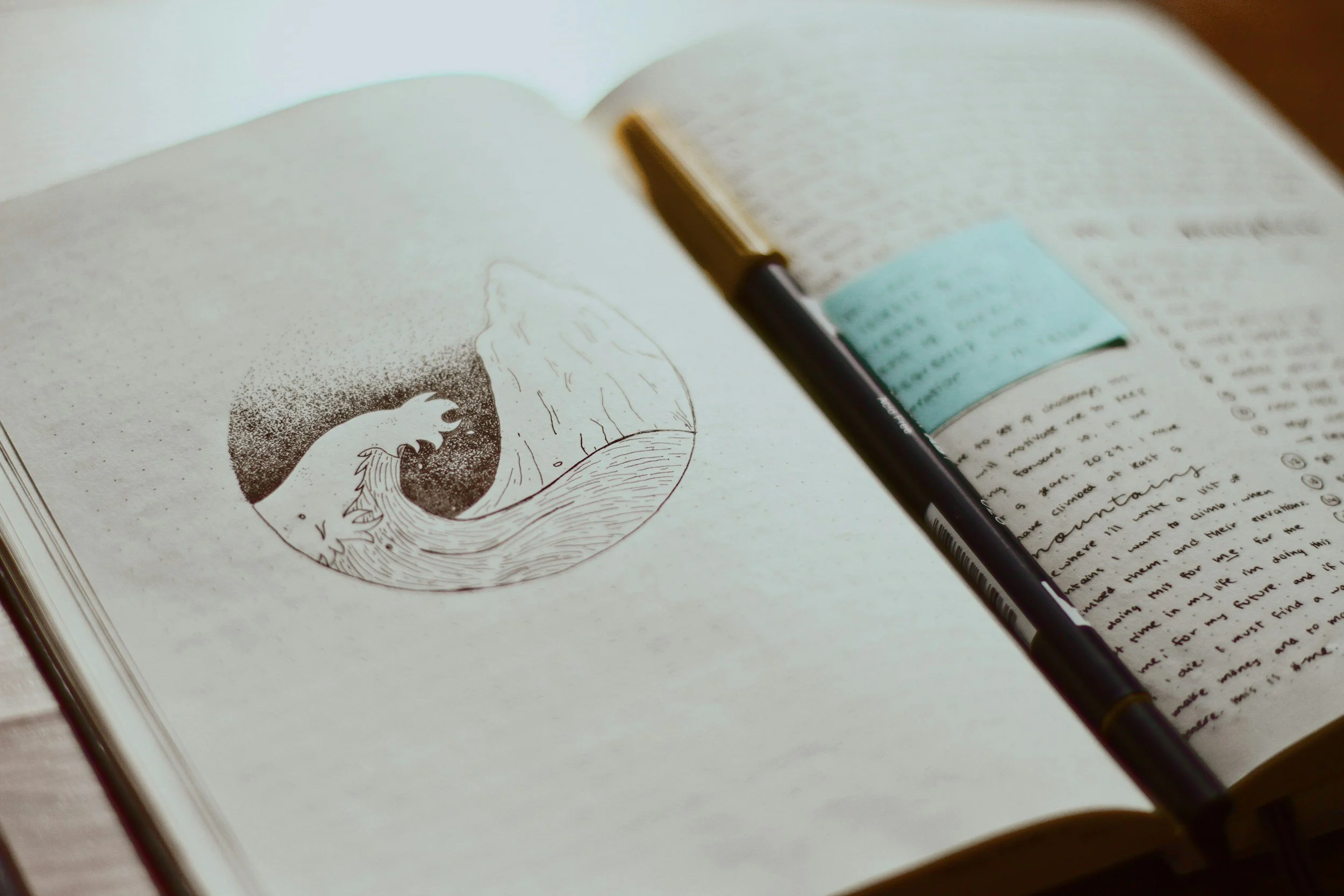
A journal page with drawing and writing on it.
Week Two: Reclaiming Your Why.
Prompt 2:
Why does this research matter to me, beyond the PhD itself?
It's easy to lose sight of the original spark that drew you to your topic. Soon, deadlines, revisions, and supervisor feedback can flatten your research into a series of tasks. You can find that passion quickly begins to feel burdensome. This week, write only about what genuinely excites you about your work and what inspires you about it.
What questions keep you awake at night? What change do you hope your research might contribute to, however small?
Reconnecting with your intellectual passion is not indulgent; it's essential fuel for the long journey ahead.
Week Three: Navigating Challenges.
Prompt 3:
What's one fear or challenge I've been avoiding naming?
Research is riddled with uncertainty. This can include methodological doubts, imposter syndrome, anxiety about post-PhD prospects, or difficult supervisor dynamics. Choose one challenge you've been skirting around and write it down and write about it honestly. Sometimes simply naming a fear diminishes its power. Once it's on the page, you can begin to think practically.
What's one small action I could take this month? Who might I talk to? What support already exists that I haven't accessed?
Week Four: Setting Intentional Rhythms.
Prompt 4:
What does sustainable research look like for me in the coming months?
Forget ambitious overhauls. Instead of goal setting, reflect on what rhythms would genuinely support both your research and your wellbeing.
Perhaps it's protecting one day a week for only reading, building in a monthly research friend check-in, or establishing a firm shutdown time. Write about what balance means for you personally, not what academic culture suggests it should mean. Be realistic and consider any predicted setback you might encounter, or any disability concerns that might mean that sustainable research means something different to you. Consider what you need to say ‘no’ to and say ‘yes’ to what matters most. Perhaps make a list of the things you will say no to this year, this can be liberarting!

A journal on a round wooden table with a coffee mug and a pen.
Moving Forward through 2026.
Journalling is not about finding perfect answers or suddenly becoming more productive. It's about developing a reflective practice that helps you navigate the doctoral journey (as well as personal goals) with more awareness, compassion, and agency. Your research will have its own timeline, its own setbacks, and breakthroughs. But the practice of regular reflection can help you stay connected to yourself throughout it all.
This January, give yourself fifteen minutes each week. Choose a quiet corner, silence your phone, and write. Your future self, the one who will look back on these months of research, will thank you for these moments of honest pause. I would also suggest using the weekly prompts every day of the week; you will come up with different thoughts each day.
Let journalling become a process that helps you get in touch with your nurturing inner voice.
Happy new year, and happy journalling in January!